SANS 1718 explained: the national standard behind South African slot machines
CasinoPopular editorsUpdated
SANS 1718 is the South African National Standard series for gambling machines and equipment, published through the South African Bureau of Standards. The National Gambling Board says all gambling machines and devices must comply, and licensed laboratories test them. It covers licensed land-based equipment, not online slots, which the national Act treats as unlawful interactive games.
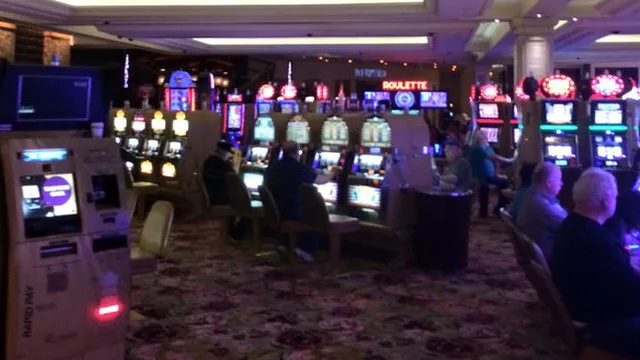
Slot players in South Africa rarely meet the document that governs the machines on a casino floor. It is not a game rule and not a licence; it is an engineering standard, and the way it is used in law says a lot about how the country regulates gambling equipment. This article collects what the National Gambling Board (NGB), the Government Gazette and the regulations say about SANS 1718. It also lists what could not be confirmed, because the standard itself is sold by the standards body and its full text was not available to read.
What the National Gambling Board says it is
The NGB's technical standards page states that all gambling machines and devices must comply with the South African National Standards 1718 gambling technical standards, which it describes as developed to protect the public and as setting out the performance requirements of the machines and devices. It adds that the technical requirements are developed jointly by the gambling regulators and the operators, under the auspices of the South African Bureau of Standards (SABS), which it calls the custodian of standards in the country.
Three things follow from that description. First, the standard is a series, not a single page of rules; the documents are numbered 1718-1, 1718-2 and so on. Second, it is written by consensus between regulators and the industry that is regulated, which is normal for a national standard. Third, it sets performance requirements, meaning what a machine must do, and testing decides whether a given machine does it.
Who tests a machine against it
The same page explains the testing chain. Machines and devices offered for play must be tested by gambling laboratories for compliance with legislation and standards. The laboratories are licensed by the gambling regulators and must be accredited by the South African National Accreditation System (SANAS), which requires compliance with ISO 17025, with continual assessment. The NGB says it is part of the assessment team that monitors the laboratories under SANAS supervision. In short, the manufacturer does not mark its own homework: an independent, accredited laboratory does.
The parts that are documented
SANS 1718 parts that appear in official documents opened for this article
Part
What the document says
Where
Single Station Gaming Machine Standard 1718
Limited payout machines must comply with it, as laid down by SABS and approved by the Board
Regulation 13, Limited Payout Machine Regulations, Notice R. 1425 of 2000
SANS 1718-3, Edition 3 (draft)
Gaming equipment, Part 3: monitoring and control systems for gaming equipment; specifies general hardware and software requirements and the list of significant events for a monitoring and control system for use in a casino
General Notice 1848 of 2023, Government Gazette No. 48696 of 2 June 2023 (comments closed 10 July 2023)
SANS 1718-4:2018, Edition 3
Applies specifically to Wagering and Record Keeping Systems
NGB notice to provincial licensing authorities, February 2026
The regulation is the most direct legal link. Regulation 13, headed “Standardisation of limited payout machines”, says all limited payout machines must comply with the Single Station Gaming Machine Standard 1718 as laid down by the Standard of the South African Bureau of Standards and approved by the Board. Limited payout machines (LPMs) are the small route-operator machines found in licensed outlets, which is a separate category from casino slots. For casinos, the Gazette notice shows the series is still being revised: the 2023 draft of Part 3 was issued for public comment by the SABS board under the Standards Act 2008 and concerns the system that monitors machines on a casino floor.
What could not be confirmed
The questions that readers most often ask are about the contents: does the standard fix a minimum return to player, how must the random number generator behave, and how are the bet and payout rules set out? None of the official pages opened for this article answers those, and the full standard is a purchased document. So the following points are not claimed here: any minimum RTP, any specific RNG test or statistical threshold, and the titles and scope of Parts 1 and 2. A consumer travel site says the standard includes anti-tampering measures, but that is a secondary description and it is not relied on. If the content of the standard matters to you, the SABS is the place to buy it, and the testing laboratory's certificate for a machine is the real proof of compliance.
One independent opinion is worth noting as opinion. In the Chambers 2025 Gaming Law guide for South Africa, practitioners call the SANS 1718 suite outdated, somewhat archaic and inadequate national certification standards for gambling technologies, say a revamp is “dramatically required”, and report delays in technical compliance approvals in the Western Cape and Mpumalanga. That is a law-firm view, not an official finding, but it shows the standard is a live subject of debate.
Why online slots fall outside it
The link between SANS 1718 and online play is where most confusion lies. The NGB issued a notice to provincial licensing authorities, signed on 25 February 2026 and publicised in a media release of 27 February 2026. It says interactive and remote gambling remain unlawful in South Africa except as authorised by the Act or another national law, and that Remote Gambling Servers (RGS), systems facilitating interactive or remote gambling, are not lawful gambling systems under the current framework. It adds that SANS 1718-4:2018 (Edition 3) applies to Wagering and Record Keeping Systems and does not provide for the testing or certification of RGS as standalone systems.
The media release records a directive from the National Regulator for Compulsory Specifications (NRCS): RGS shall not be submitted for certification against SANS 1718, the NRCS will not issue, renew or extend Letters of Certification for them, and any previously issued letters lapse on expiry. Section 11 of the National Gambling Act 7 of 2004 says a person must not engage in or make available an interactive game except as authorised. The consequence for a player is plain. A slot you play online from South Africa has no SANS 1718 certificate behind it, because the standard framework has no route to certify it. Whatever testing the game has had was done to another jurisdiction's rules, such as those of the regulator that licensed the operator abroad.
That is also why a “SANS 1718 compliant” label on a casino-floor slot and an RTP figure in an online help screen are different kinds of claim. For the way we assess online slot information, see how we rate; for what faults mean on a machine, slot machine malfunctions; and for fairness questions, are online slots rigged. On the legal side, see whether online casinos are legal in SA. Gambling is for adults aged 18 and over; the South African Responsible Gambling Foundation helpline is 0800 006 008, and you can SMS “HELP” to 076 675 0710.
Questions readers ask
What is SANS 1718?
It is the South African National Standard series for gambling machines and devices. The National Gambling Board says all such machines must comply, and that the requirements are developed jointly by regulators and operators under the South African Bureau of Standards. Accredited laboratories test machines against it.
Does SANS 1718 set a minimum RTP for slot machines?
No source opened for this article says so, and the full standard was not available to read, so no minimum is claimed. For a specific machine, the testing laboratory's certificate and the provincial board are the authorities, not a number quoted online.
Do online slots have to meet SANS 1718?
No. The National Gambling Board states that remote gambling servers are not lawful gambling systems and that SANS 1718-4 does not provide for certifying them. Online casino games are interactive games, which the Act makes unlawful unless authorised.
Who tests gaming machines in South Africa?
Gambling laboratories licensed by the gambling regulators. According to the National Gambling Board they must also be accredited by SANAS, which requires compliance with ISO 17025, and the Board takes part in assessing them.
Prepared by the CasinoPopular editors from the sources listed above. This is general information, not financial or legal advice. Spotted a mistake? Write to [email protected]. Problem gambling helpline (SARGF): 0800 006 008, free and open 24/7.
The lights go out between pressing spin and seeing the reels stop. This guide explains how a regulator treats interrupted rounds, what a free-spins session…
The SARGF counselling line is free, confidential and open all day. What its own pages say about the first call, the assessment, the referral, the sessions and…
Microgaming did not disappear in 2022; its games, jackpot network and studio stakes were sold to Games Global. A dated timeline of the deal and what it means…
This site sets no advertising or tracking cookies. Our network provider may set a technical security cookie, and your browser remembers that you closed this note. Privacy and cookies