Reels & features
Cherries, bells and BARs: where classic slot machine symbols come from
Cherries, lemons, bells and the black BAR were not chosen for luck. They are leftovers from a chewing-gum disguise that slot machines wore a century ago. Here…
Reels & features
The gamble feature offers to double a win on a 50% guess, usually the colour of a hidden card. If the odds are truly even, the expected value equals the win you started with, so the feature adds nothing to your return. What it adds is risk: surviving n gambles in a row has a chance of 1 in 2^n.
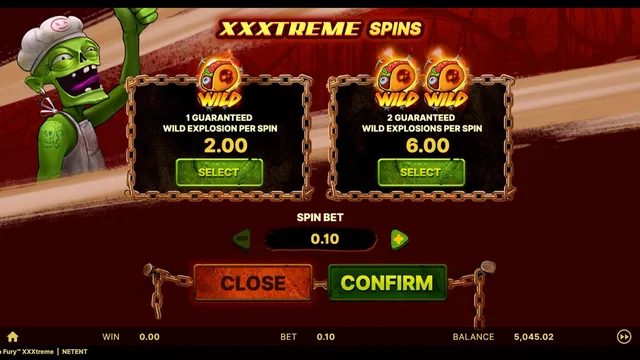
Some slots do not end the round when a win lands. They offer a choice: take the money, or risk it. The feature goes by several names, such as gamble, double up, risk game or card game, and it works the same way almost everywhere. This guide does the sums, shows what happens when the gamble is repeated and sets out what the one official text read for this article says players must be told.
As casinos.com describes it, the gamble feature presents itself after a win from a spin. You can risk that win: win the risk and receive the greater prize, or lose and your recent winnings are gone. The page calls the standard version a 50/50 game of chance, and says that in a card version picking a suit comes with a greater prize because of the higher risk, without stating the multiple. It lists Book of Dead and Book of Ra Deluxe among the games that carry the feature, and notes that some use a card, some a pie-style wheel and some a bonus gamble. The page does not say how many times you may repeat it or whether a ceiling applies, so those limits are set by each game's rules.
The Wizard of Odds glossary defines expected value as how much you can expect to lose or win from a bet, and the house edge as the expected player loss divided by the amount bet. Apply that to a gamble. Take a win of W and a true 50% chance:
Expected value after gambling = 0.5 x 2W + 0.5 x 0 = W.
With W = R100, half the time you hold R200 and half the time nothing, so on average R100 (0.5 x 200 = 100). That equals the sure R100 you could have collected. The house edge on this step is zero, so the gamble neither costs nor adds to your expected return. Any edge in the session came from the base game spin that produced the win.
The same logic applies to a four-suit guess. A fair offer pays the reciprocal of the chance: a 1-in-4 pick should pay 4 times the win, since 0.25 x 4 = 1. The casinos.com page does not give the multiple for suits, so treat the 4 times as a fair-value benchmark and compare it with the game's rules.
The catch is the word "true". If a game's chance were 48% instead of 50%, the expected value of a R100 gamble would be 0.48 x 200 = R96, a R4 loss on the step. That is a hypothetical, not a figure from any game, but it shows why the stated probability matters and why the next section's regulator wants it disclosed.
The risk grows quickly when you keep going. To survive n gambles in a row you must win each one, and the chance is 1/2 multiplied by itself n times, which is 1/2^n. The prize after n wins is 2^n times the starting win. Starting from R100:
| Gambles won in a row (n) | Chance (1/2^n) | Prize (100 x 2^n) | Chance of losing it all | Expected value |
|---|---|---|---|---|
| 1 | 50% | R200 | 50% | R100 |
| 2 | 25% | R400 | 75% | R100 |
| 3 | 12.5% | R800 | 87.5% | R100 |
| 4 | 6.25% | R1,600 | 93.75% | R100 |
| 5 | 3.125% | R3,200 | 96.875% | R100 |
Each row checks out: for n = 5 the chance is 1/32 = 0.03125 and 0.03125 x R3,200 = R100. The expected value never moves, but the chance of keeping anything shrinks to 1 in 32 while the headline prize grows. The "risk of ruin" is the bottom line of the fourth column: 1 - 1/32 = 96.875% of the time you walk away from the R100 with nothing. Push it to ten gambles and the chance is 1/1,024 (about 0.1%) for R102,400, which is why feature caps exist in the rules.
So the feature does not make a win more valuable; it converts a certain R100 into a lottery ticket whose average is the same R100. Variance goes up. Whether that is entertaining is a personal choice, but it is not a method of making money. For why no strategy can change a negative base game, see our article on slot machine strategy.
The card is the best-known version, but not the only one. The interpretation notes of Germany's gambling authority, the GGL, describe optional risk games as features that multiply a win with a probability of 50%, giving as examples picking the colour of a card to be drawn, or betting on reaching one of two steps on a ladder. A ladder is the same maths in another shape: each step is an even-chance double, so reaching rung n is again 1/2^n. A wheel or pie that offers a 50% slice is, again, the same bet. Only a version with a different chance or a different multiple has a different expected value, and the rules must say so.
| Belief | What the maths or the official text says |
|---|---|
| "After four reds, black is due." | The GGL requires a notice with the card game that the number of colours already shown has no influence on the next card or the chance of winning. |
| "One safe gamble on a big win is fine." | The expected value of one gamble is the win itself, but half the time the whole win is lost. |
| "Gamble only small wins to build up." | Five wins in a row has a chance of 1/32 whatever the starting amount. |
| "The feature improves the slot's RTP." | With a true 50% chance it leaves expected return unchanged, and below 50% it lowers it. |
The GGL notes (dated September 2024 in the file name) say optional risk games with a 50% probability are permitted if their flow is explained in the game rules and the actual probability distribution is expressly pointed out, and the design must not give a contrary impression. That is the rule of Germany's authority for its licensed virtual slots; this article does not claim that any regulator bans the feature, because the official text read here allows it on those conditions. Your casino's help screen is the place to find out how your game handles it.
In South Africa, interactive casino games are not licensed under the National Gambling Act 7 of 2004, so no local body sets the disclosure for online slots reached from offshore sites. Gambling is for adults 18 and over. Gambling a win to chase a bigger one is a classic pattern of losing control; if that sounds familiar, the South African Responsible Gambling Foundation offers a free helpline on 0800 006 008, and you can SMS "HELP" to 076 675 0710. For game-choice questions see games with the best chance of winning, and for whether results can be fixed, are online slots rigged.
It is a fair bet if the chance is truly 50%: 0.5 x 2W equals W, so the expected value is unchanged. It adds no edge and no cost, only risk. If the real chance is below 50%, the feature lowers your expected return.
Each win has a 1 in 2 chance, so n wins in a row has a chance of 1/2^n. That is 25% for two, 12.5% for three, 6.25% for four and 3.125% (1 in 32) for five.
No. Each card is independent. Germany's GGL even requires card-gamble games to tell players that the colours already shown have no influence on the next card or on the chance of winning.
This article found no official text that bans it. Germany's GGL permits optional 50% risk games if the rules explain them and state the actual probability. Other regulators may differ, so check the rules of the game you are playing.
Prepared by the CasinoPopular editors from the sources listed above. This is general information, not financial or legal advice. Spotted a mistake? Write to [email protected]. Problem gambling helpline (SARGF): 0800 006 008, free and open 24/7.
Cherries, lemons, bells and the black BAR were not chosen for luck. They are leftovers from a chewing-gum disguise that slot machines wore a century ago. Here…
On Starburst, coin value x bet level x 10 lines gives the stake from 0.10 to 100. How the same dials work on Hotline and Great Blue, with R-amounts worked out…
The lights go out between pressing spin and seeing the reels stop. This guide explains how a regulator treats interrupted rounds, what a free-spins session…
This site sets no advertising or tracking cookies. Our network provider may set a technical security cookie, and your browser remembers that you closed this note. Privacy and cookies