Reels & features
Coin value x bet level x lines: how a slot's total bet is really built
On Starburst, coin value x bet level x 10 lines gives the stake from 0.10 to 100. How the same dials work on Hotline and Great Blue, with R-amounts worked out…
Reels & features
The bell comes from Charles Fey's Liberty Bell machine of 1899, the fruit from the fruit-flavoured chewing gum that Mills Novelty machines dispensed from 1910, and the BAR from the gum company's logo. Gum was a disguise: it let a gambling machine pass as a vending machine. The symbols outlived the gum.
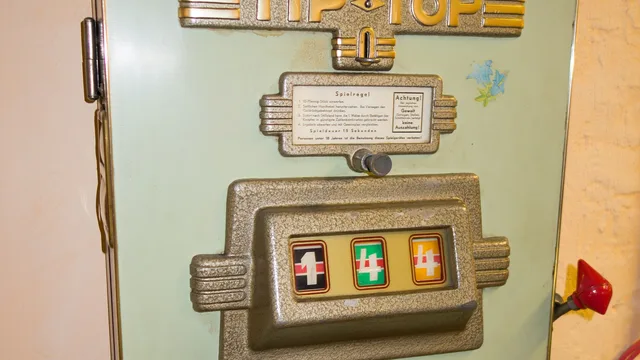
Open a modern slot and you can still find cherries, lemons, plums and bells next to a red seven. None of these has anything to do with how the game pays. They are historical fossils, and the story of how they arrived is a story about a legal workaround. This article follows the trail in order, says where the sources disagree, and finishes with what two classic NetEnt games actually show on their own pages.
The starting point is the Liberty Bell, built by Charles Fey in San Francisco. Wikipedia's slot-machine history says Fey's three-reel design dates from some time between 1887 and 1895, and cites the Nevada State Museum for a surviving 1899 Liberty Bell in its Fey Collection; the Las Vegas Advisor, which answers the question directly, gives 1899. Either way, the symbols were not fruit. The reels carried horseshoes, diamonds, spades, hearts and a Liberty Bell, and the bell gave the machine its name.
The top prize was lining up three bells. Wikipedia and the Las Vegas Advisor agree that it paid ten nickels. A nickel is 5 cents, so the arithmetic is simple: 10 x 5c = 50c, which is ten times the coin that bought the play. That is the first jackpot and the origin of the bell as the “best symbol” on a reel.
Others copied Fey. According to Wikipedia, Mills produced the first copies in 1907, using the same symbols as the original. The change that matters came a few years later, and the best source for it is an essay on Fey in Cabinet magazine. It dates to 1910 the moment Mills Novelty added a mechanism that gave the player the option of getting a piece of gum with every nickel played. In its words, this turned the slot machine's image “from gaming device to vending machine”, which helped it evade the gambling laws of the day. (The Las Vegas Advisor mentions San Francisco's 1909 slot ban as part of that background.) The gum was reportedly of poor quality, and the operator cared mainly about what the machine paid, but the disguise worked.
If the machine was a gum dispenser, its reels could advertise the flavours. Cabinet says the fruit symbols replaced Fey's poker symbols to suggest the fruit gum the machine dispensed, and names cherry, orange, plum and lemon as the result. The Las Vegas Advisor lists the same flavour idea slightly differently, with lemon, cherry, watermelon, orange and plum. The sources do not give identical lists, so the safest statement is that the reels showed fruit-gum flavours, and that the exact set varied by machine.
The bell survived this makeover. Cabinet says the bell symbol originated from Fey's earlier three-reel “Liberty Bell” slots, and Wikipedia notes that the Mills-style Operator's Bell, which could add a gum-vending attachment, kept a bell among its new fruit symbols. That is why bells and cherries sit together on the same reels today even though they come from two different eras.
The BAR is the least obvious symbol, and the sources give two slightly different versions that fit together:
Wikipedia attributes the picture of a Bell-Fruit Gum stick on the machine to Marshall Fey's 1983 book on slot-machine history, and says Caille, Watling, Jennings and Pace also built machines with this symbol set. Note the direction of the story: the bar was a brand, then a logo, then a plain shape. Nobody designed it to mean “bar” as in a pub.
The sources opened for this article do not explain the seven. Wikipedia mentions “lucky sevens” only as a classic symbol in its description of how slots work, and the Las Vegas Advisor says explicitly that it does not discuss their origin. Rather than repeat a popular story with no source behind it, this article leaves the seven's origin open. One related claim in Cabinet's essay, that no slot had a jackpot until 1928, conflicts with the three-bell top prize described above, so it is not used here.
The honest answer is recognition. A player looking at a 3-reel game expects fruit, bells and BARs, and studios use them to signal “classic”. NetEnt's own pages show how the label is used. Mega Joker is described as a 3-reel, 5-line fixed slot on a 3x3 layout, with a Supermeter mode in which a basic-mode win can be moved to play on the top reels (maximum Supermeter win 2000 coins), mystery wins decided by the joker's position, and a progressive jackpot awarded on a randomly selected game round. Its stats list an RTP of 99.00% and a maximum payout of 200x the bet, with bets from €1.00 to €10.00. At the minimum €1.00 bet, 200x is €200; at €10.00 it is €2,000.
Jackpot 6000 is called a 3-reel, 5-line classic slot, with a Double-Up game after a win and a Supermeter mode. Its page lists an RTP of 98.90% and a maximum payout of 600x the bet. NetEnt's pages for both games do not list the symbols, so this article does not claim which ones appear on their reels; open the paytable in the game to see them. You can read our own reviews of Mega Joker and Jackpot 6000, and the wider NetEnt hub.
One caution on the figures: RTP is a property of a game version, and casinos can load different settings, so the percentages above are what NetEnt's pages show, not a promise about the version you open. For South African readers, online casino games are not licensed under the National Gambling Act 7 of 2004, and gambling is for adults aged 18 and over. The South African Responsible Gambling Foundation helpline is 0800 006 008 (SMS “HELP” to 076 675 0710).
They come from the fruit-flavoured chewing gum that Mills Novelty machines dispensed from 1910. Cabinet magazine says the fruit symbols replaced Fey's poker symbols to suggest the fruit gum the machine dispensed, so the reels advertised flavours.
It does not stand for a pub bar. According to the Las Vegas Advisor, it grew out of the Bell-Fruit Gum Company's gum-stick logo used as a top award, and it became known as a bar because of its rectangular shape once the gum logos were dropped.
Charles Fey of San Francisco. His Liberty Bell machine is dated to 1899 by the Las Vegas Advisor, and Wikipedia says its three-reel design dates from between 1887 and 1895. Three bells paid the top prize of ten nickels.
Not as a rule. NetEnt's page lists Mega Joker at 99.00% RTP and Jackpot 6000 at 98.90%, but casinos can load different versions, so check the help screen of the game you open.
Prepared by the CasinoPopular editors from the sources listed above. This is general information, not financial or legal advice. Spotted a mistake? Write to [email protected]. Problem gambling helpline (SARGF): 0800 006 008, free and open 24/7.
On Starburst, coin value x bet level x 10 lines gives the stake from 0.10 to 100. How the same dials work on Hotline and Great Blue, with R-amounts worked out…
Gonzo's Quest adds 10 free falls, Great Blue adds 15 spins at the same multiplier, Thunderstruck II varies by round. A game-by-game look at retrigger rules and…
Every legal gaming machine in South Africa has to meet one national standard. We went to the National Gambling Board, the Gazette and the regulations to see…
This site sets no advertising or tracking cookies. Our network provider may set a technical security cookie, and your browser remembers that you closed this note. Privacy and cookies